Marrakech is an open-air history book where every arch, dome, and fountain tells a story of Moroccan spiritual and building genius. Islamic architecture in Marrakech is not merely aesthetic; it is a science of geometry, light, and symbolism. From the fineness of carved stuccos to the enclosed gardens, let’s explore the secrets of traditional architecture in Marrakech.
One of the fundamental characteristics of traditional architecture in Marrakech is the organization of space toward the interior (introversion). Unlike Western buildings that face the street, a Moroccan home or palace is built around a central courtyard, preserving privacy and coolness.
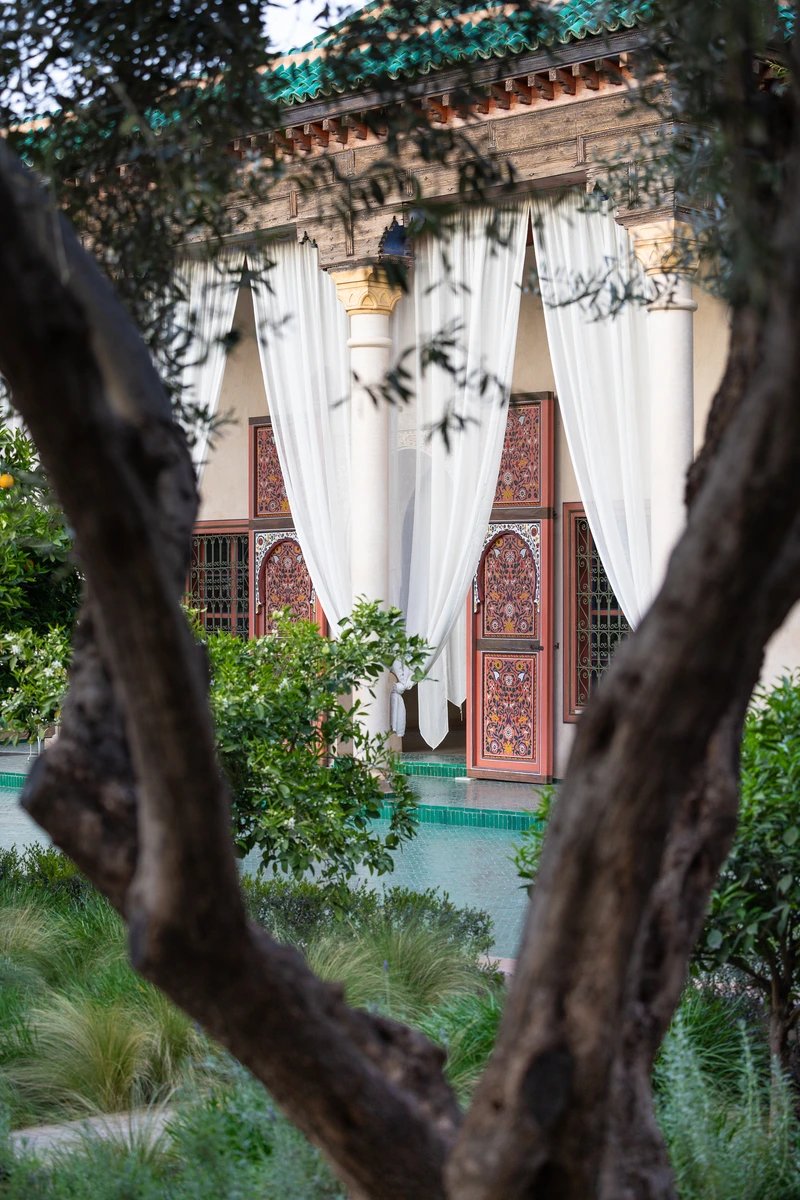
In Islamic architecture in Marrakech, the patio is more than just a corridor. It is a representation of paradise on earth. Often adorned with a central fountain, it symbolizes life and purification. Le Jardin Secret, with its two distinct gardens, offers one of the most accomplished examples of this quest for inner serenity.
The use of geometric patterns (Girih) is never accidental. These infinite interlacings remind the observer of the indivisible and infinite nature of the Divine. You can find them everywhere: from the colorful zellige tiles on the floor to the painted cedar wood ceilings (zouak), creating a visual harmony that soothes the soul and invites contemplation.
The longevity of traditional architecture in Marrakech relies on natural materials that breathe. During the restoration of Le Jardin Secret, immense care was taken to respect ancestral craftsmanship.
Zellige, the mosaic of glazed terracotta tiles, is the emblem of traditional architecture in Marrakech. When paired with stucco (hand-carved plaster), it creates a play of texture that transforms walls into stone lace. Each piece of zellige is manually cut to fit perfectly together without visible joints.
Used in the palace’s basins and hammams, Tadelakt is a lime plaster polished with a river stone and treated with black soap. This typical material of Islamic architecture in Marrakech offers a silky, shiny appearance while being perfectly waterproof.
Traditional architecture in Marrakech is inseparable from the mastery of water and the surveillance of the territory.
Le Jardin Secret is one of the few places where you can still understand the functioning of khettaras—underground channels that brought water from the Atlas Mountains. This link between architecture and hydraulic engineering is one of the best-kept secrets of the city's historical prosperity.
Dominating the district, the Tower of Le Jardin Secret is an exceptional element of traditional architecture in Marrakech. Historically, these towers allowed owners to monitor the arrival of water but also served as a symbol of power. Today, it offers an unbeatable view of the Koutoubia minaret and the entire Medina.
Dive into the heart of traditional architecture in Marrakech by visiting Le Jardin Secret. A lesson in elegance and history awaits you at every corner.
Book your tickets here to explore this masterpiece