Moroccan architecture does more than just build walls; it carves light and colors the silence. When you step through the doorway of one of the most beautiful riads in Marrakech, you are immediately struck by the finesse of the details. Between the geometric mosaics on the floor and the lace-like plaster on the ceilings, every element is an invitation to contemplation.
In this quest for harmony, traditional Moroccan gardens in Marrakech play a pivotal role. They are not merely green spaces, but architectural extensions where the mineral and the botanical unite to create a true peaceful oasis in Marrakech.
Zellige—the small, hand-cut enameled terracotta tile—is the ultimate symbol of Moroccan patience and precision.
While zellige dresses the floors, carved plaster, or Gebs, crowns the arches and ceilings.
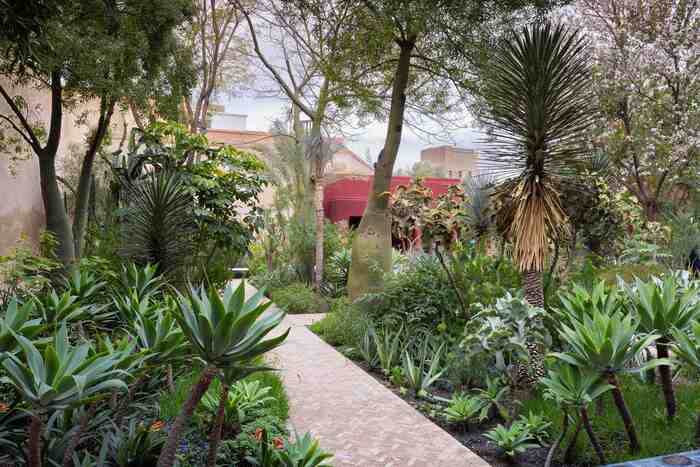
The art of detail does not stop at the walls. Traditional Moroccan gardens in Marrakech are designed to enhance the architecture. Brick paths laid in herringbone patterns and zellige borders provide a formal structure to the greenery.
A true peaceful oasis in Marrakech relies on this balance: the rigor of human geometry (zellige) meeting the freedom of nature (plants). Le Jardin Secret is the finest example of this, where the restoration of plaster and terracotta was carried out by the country’s top master artisans.
1. Where can I see the finest zellige and carved plaster in Marrakech? Le Jardin Secret and the Ben Youssef Madrasa are the two major sites to admire this work. These are quiet places in Marrakech where you can take the time to observe every detail away from the crowded commercial zones.
2. What characterizes the most beautiful riads in Marrakech? Beyond luxury, it is the authenticity of the materials. An exceptional riad is recognized by the quality of its hand-carved (not molded) plaster and the unique patina of its artisanal zellige tiles.
3. Why do traditional Moroccan gardens in Marrakech use so many mosaics? Zellige helps maintain coolness around water features and creates a visual contrast with the vegetation. It is an essential element for creating a peaceful oasis in Marrakech.
4. Can we still see artisans working these materials today? Yes, the craft is very much alive. By visiting quiet places in Marrakech like restored palaces or museums, you contribute to the preservation of this world-unique craftsmanship.
Don't just look from a distance. Come and experience the excellence of Moroccan craftsmanship in a beautifully preserved historical setting.
Book your visit to Le Jardin Secret and discover the art of zellige and carved plaster.